
Criminal Cases in the Massac County Courts
Massac County Circuit Court is part of Illinois's First Judicial Circuit and is the local trial court for felonies, misdemeanors, traffic matters, and ordinance cases. Illinois does not place Massac felonies in a separate district court. Courtroom assignment and prosecution source may differ, but all of these local matters enter the circuit-court system. The State's Attorney prosecutes state crimes and county ordinances; municipal counsel may prosecute city ordinance cases.
The Circuit Clerk at 1 Superman Square in Metropolis is the custodian. The office schedules cases, records filings and orders, collects court-ordered fines and fees, and supplies plain or certified copies. The County Clerk handles elections, recordings, and other county records, so sending a criminal docket request there delays the search. Call 618-524-9359 with the case number, name, and approximate filing year.
The Massac County Judici entry point displays the public case-search route.
Judici is the index and access layer, while the Circuit Clerk remains the official record custodian.
Massac County Felonies Share One Court
A felony, misdemeanor, traffic charge, or city ordinance matter can all appear in the Massac County Circuit Court system. The class of an offense affects potential punishment, but it does not send a felony to a separate county-level court. A booking entry may also show an initial class that later changes after the State's Attorney reviews the report.
Case numbers, filed charges, and count-by-count outcomes are therefore better guides than a label copied from the first jail entry. If a city citation or traffic matter does not appear where expected, call the Circuit Clerk to confirm the docket and prosecution source. The clerk can also explain whether a file is at the counter, archived, impounded, or sealed without disclosing protected content.
How to Search Case Records
Judici is the best public starting point because Massac County participates. The public landing page advertises free searching within participating courts, and the Massac County information states that criminal and civil files are current from 1986. Older matters, non-digitized documents, and files under access restrictions require a clerk inquiry.
- Open Judici and choose Massac County from the participating-court list.
- Use the full clerk-formatted case number when it is known; otherwise use the person-name path.
- Add the first name and middle initial, then choose a criminal or traffic category when relevant.
- Open the likely matter and compare the county, case number, filing date, charges, and event history.
- Ask the Circuit Clerk for a plain or certified copy and a fee quote when the online summary is not enough.
| Field or control | Type | Required | Use |
|---|---|---|---|
| Court | Dropdown | Yes | Select Massac County |
| Person/name | Search path | One path | Use when no case number is known |
| Last name | Text | For name path | Enter the legal surname |
| First name | Text | Unspecified | Narrows common-name results |
| Middle initial | Text | No | Useful for disambiguation |
| Case number | Text | For number path | Use the full clerk format |
| Case category | Selector | No | Choose criminal or traffic as relevant |
The Judici public access landing page shows its county selector and access tiers.
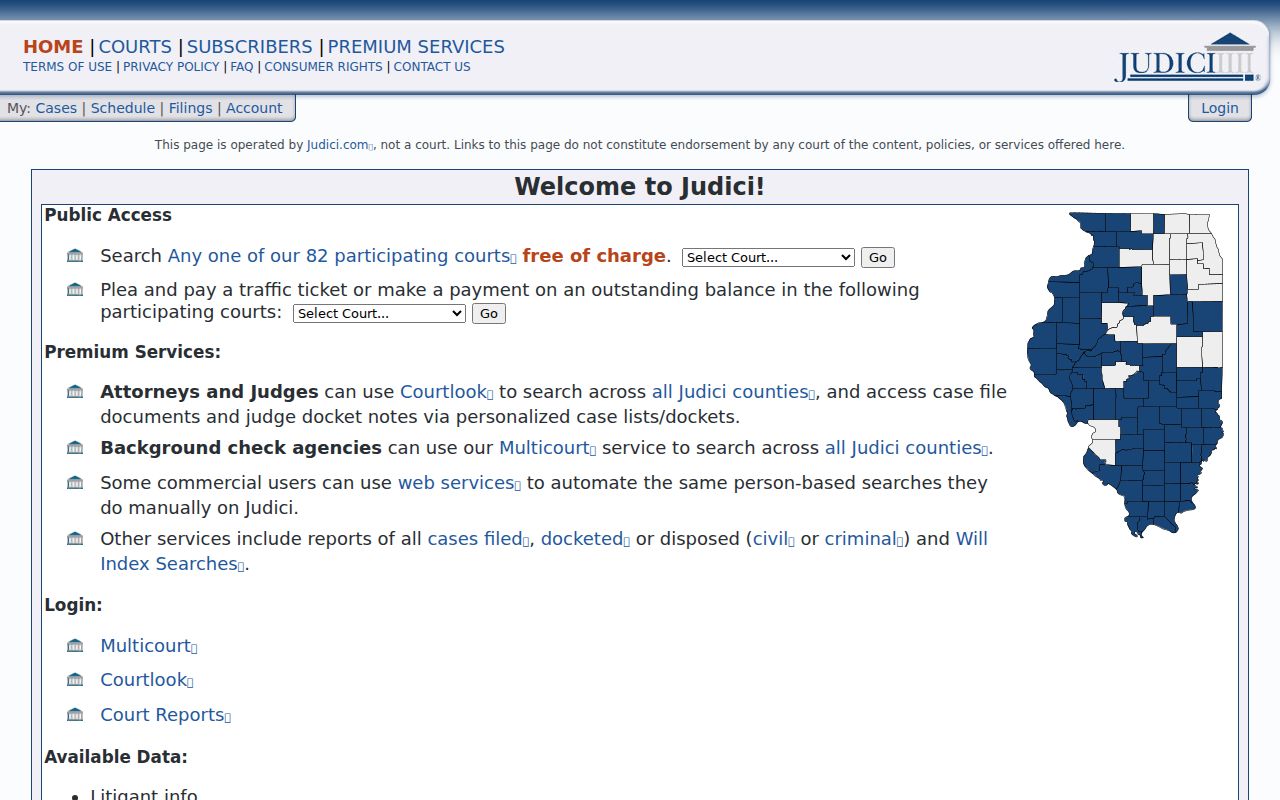
Premium labels such as Multicourt and Court Reports should not be confused with the free single-court search.
When Massac County Documents Are Missing
A Judici result may show the docket without offering every underlying document. That gap does not mean the paper never existed. Document access varies by county and case, some tools require an account, and protected or older material may be available only through the clerk. Record the case number before calling. Ask for the specific complaint, information, indictment, order, judgment, sentence, or docket sheet rather than “the whole file.”
No official Massac copy, search, or certification schedule was found online. Request a quote before ordering. The courthouse address is 1 Superman Square, Metropolis, IL 62960. The Illinois Courts directory also identifies 101 West 8th Street, places the clerk in Room 2D, and lists public hours of 8:00 a.m. to 4:00 p.m. Call first when a visit depends on access, equipment, or accommodation details.
What the Case File Shows
A Massac County criminal case file is organized by the court's action, not by the jail's intake process. It can connect the filed accusation to later amendments, pleas, rulings, and the outcome for each count. Read the event date and disposition date carefully. A case-level status can hide different results on separate counts.
| Case Number & Court | Clerk identifier, county, case type, filing date, and current status |
|---|---|
| Charging Document | Complaint, information, or returned indictment stating filed counts |
| Docket Entries | Chronological minutes, filings, motions, orders, and payment entries |
| Hearing Dates | Scheduled appearances, proceeding type, judge, and later changes |
| Disposition & Judgment | Plea, dismissal, acquittal, conviction, supervision, and outcome date by count |
| Sentence & Conditions | Custody, probation, fines, assessments, restitution, and other orders |
The difference matters after an arrest. Police may allege one offense, the prosecutor may file another, and the judge may enter different outcomes across several counts. For the broader path from arrest and booking into the court system, the Massac County arrest history page separates those records.
Reading Massac County Dispositions
“Pending” means the case or count has not reached a final result. It is not guilt. “Dismissed” means that charge ended without a conviction. “Nolle prosequi” means the prosecutor chose not to continue that charge. An acquittal is a not-guilty result. Illinois court supervision can allow a case to end without a judgment of conviction after successful completion, but the exact legal effect depends on the offense and later compliance.
- Disposition
- The outcome entered for a charge.
- Arraignment
- The hearing for formal charge and plea.
- Docket
- The chronological register of court events.
- Impounded
- Access restricted by a court order or rule.
- Mittimus
- The court's commitment order.
Never infer that all counts share one result. Open the charge detail and note each disposition date, plea, and sentence. If a short code or minute entry is unclear, give the clerk the case number and ask which filed document states the result.
Stages of a Criminal Case
A local matter may begin with arrest or summons, followed by a first appearance and probable-cause work. The State's Attorney reviews the police material and files a complaint, information, or seeks an indictment when required. At arraignment, the accused answers the charge. Discovery, motions, and negotiations follow. The case then moves to a plea or trial, judgment, sentence, and possible appeal or post-judgment proceedings.
Case flow: Charges Filed › Arraignment › Pretrial › Plea or Trial › Disposition › Sentencing
The Circuit Clerk records each step. A release from the Massac County Jail does not close the prosecution, and the lack of an immediate online filing can reflect reporting lag. Search again or call the clerk when an arrest is recent.
Older Massac County Court Files
Judici's stated 1986 starting point is a real search limit. The absence of an earlier case from that index is not proof that no case existed. Begin with the Massac County Circuit Clerk, using a full name and approximate year. The clerk can determine whether the file is onsite, held in an older format, transferred, sealed, or impounded.
Massac County was created in 1843, so genealogy and historical research may reach archival series. The Illinois Regional Archives Depository at Southern Illinois University is the next official channel for transferred local-government records. This creates a three-part path: Judici for indexed modern matters, the clerk for court files, and IRAD for qualifying archival holdings.
The Illinois Courts expungement and sealing forms page also reflects how case-file access may change after relief.
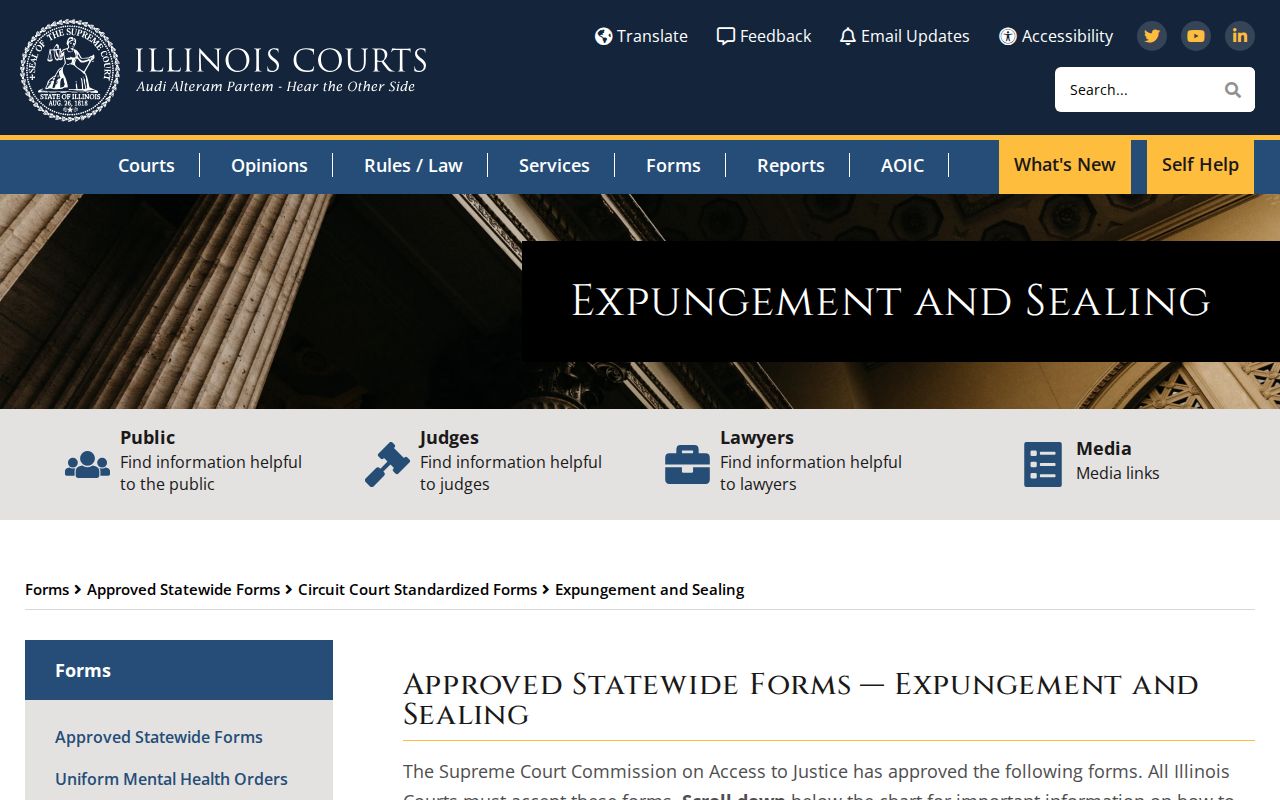
Use the current statewide suite and ask the Massac clerk about local filing costs, which were not posted in the reviewed sources.
Access & Restrictions
Open court access does not make every field or document public. Juvenile matters, sealed cases, impounded records, victim information, personal identifiers, and other protected content can be withheld or redacted. Court files are governed by Illinois court rules, orders, and clerk custody rather than ordinary agency FOIA. Police and jail administrative records use the Illinois Freedom of Information Act, but the filed prosecution belongs at the clerk.
An online omission can mean a date-range limit, a non-digitized document, a restriction, or a mismatch in the search terms. Ask the clerk whether the matter exists and what access rule applies. Do not demand protected facts or treat a sealed result like a technical search error. For personal record correction, compare the court disposition with an ISP Access and Review transcript because state disposition reporting can lag or be incomplete.
The Metropolis police FOIA page illustrates the separate agency-record route.
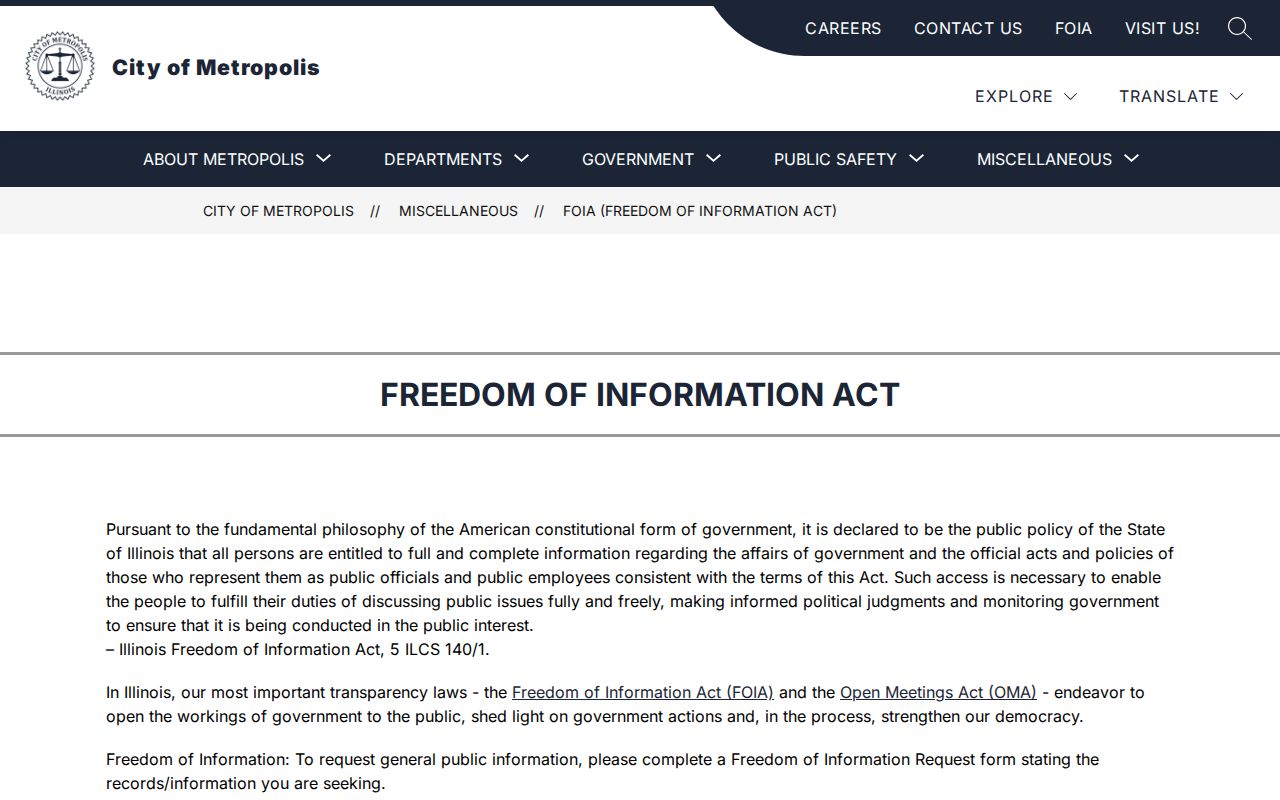
That form can seek police-created material, but it does not replace a request to the Circuit Clerk for a court case file.
Federal Cases Beyond Massac County Court
A federal prosecution arising in Massac County belongs to the U.S. District Court for the Southern District of Illinois, not the Massac County Circuit Court. PACER is the official federal docket and document service. Registration is required. PACER charges $0.10 per page with a $3 cap per document, and quarterly charges of $30 or less are waived under its current schedule.
The PACER service is the national federal access point.
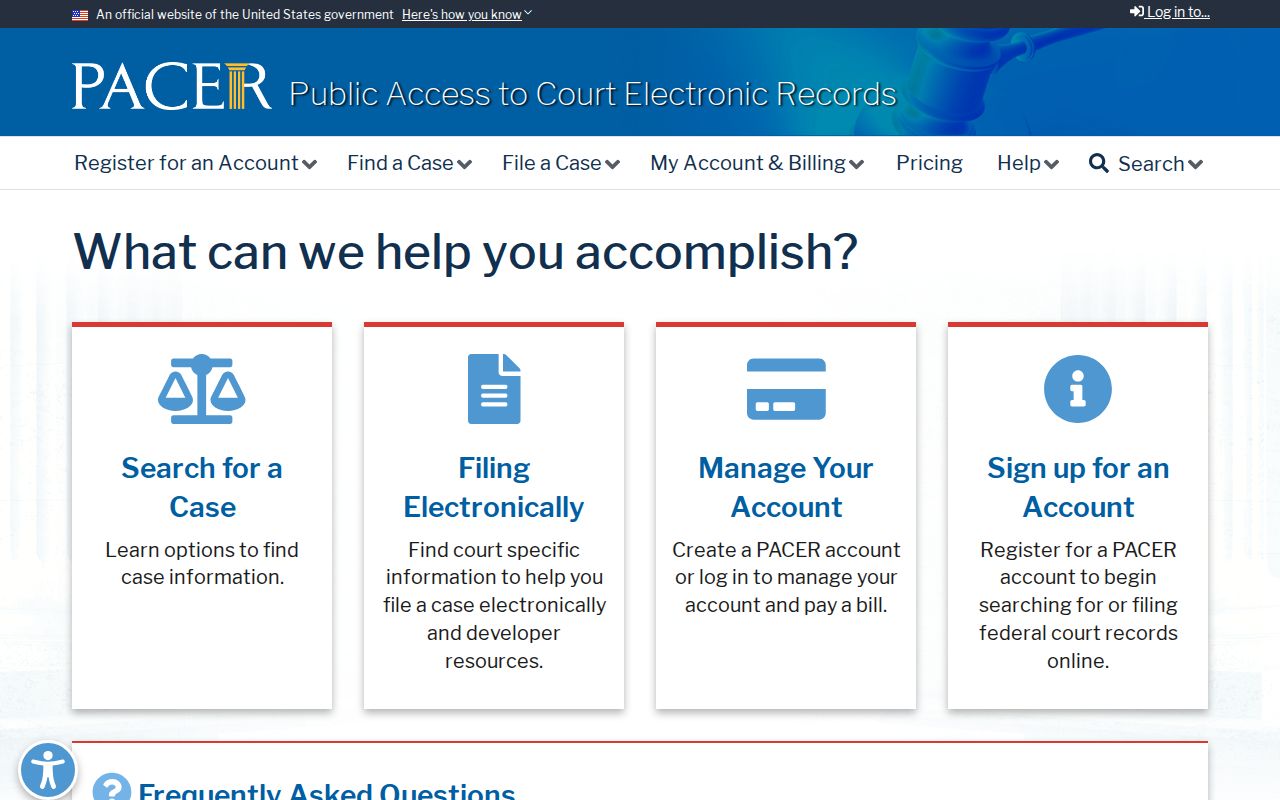
A PACER result should be verified against the Southern District court and should not be mixed with a Massac County Judici docket.
The Southern District of Illinois website identifies the federal court serving Massac County.
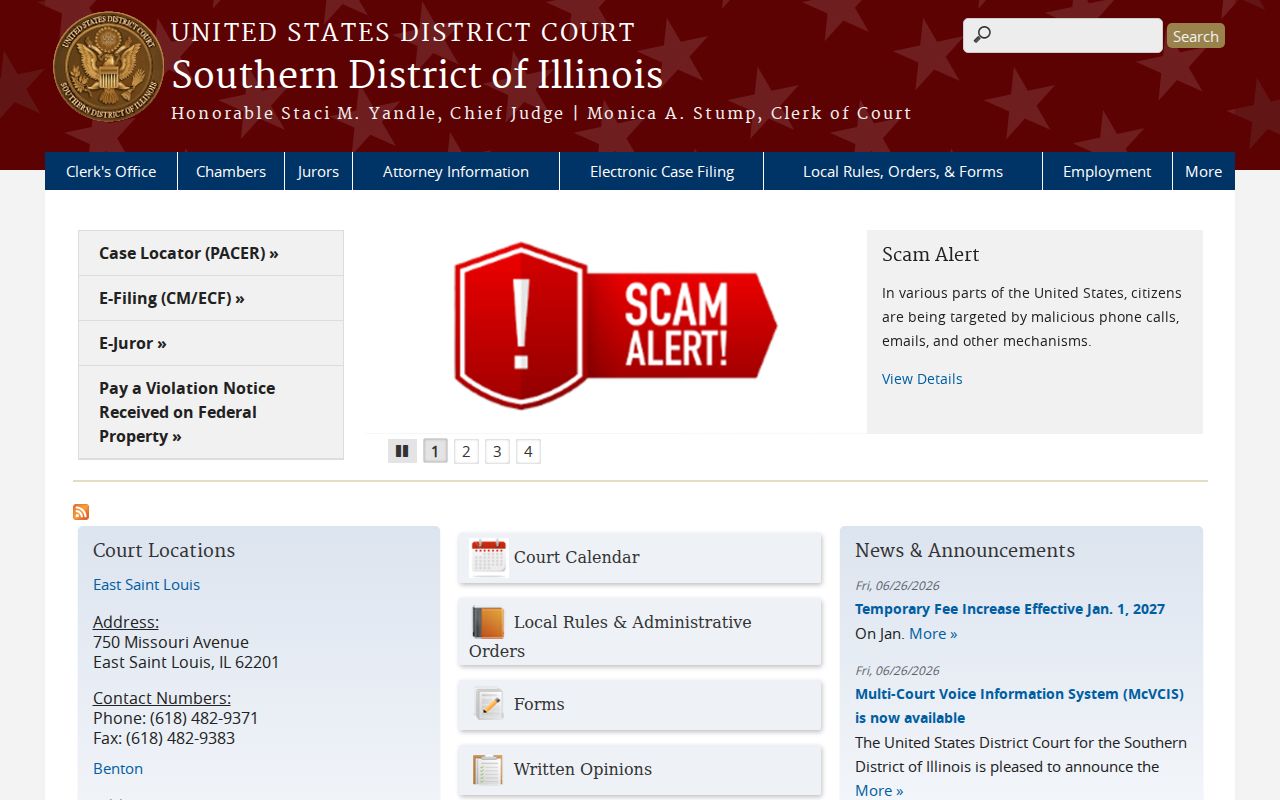
Venue and courthouse assignment can vary, so confirm them on the federal docket rather than assuming the nearest building.